Live Webinar



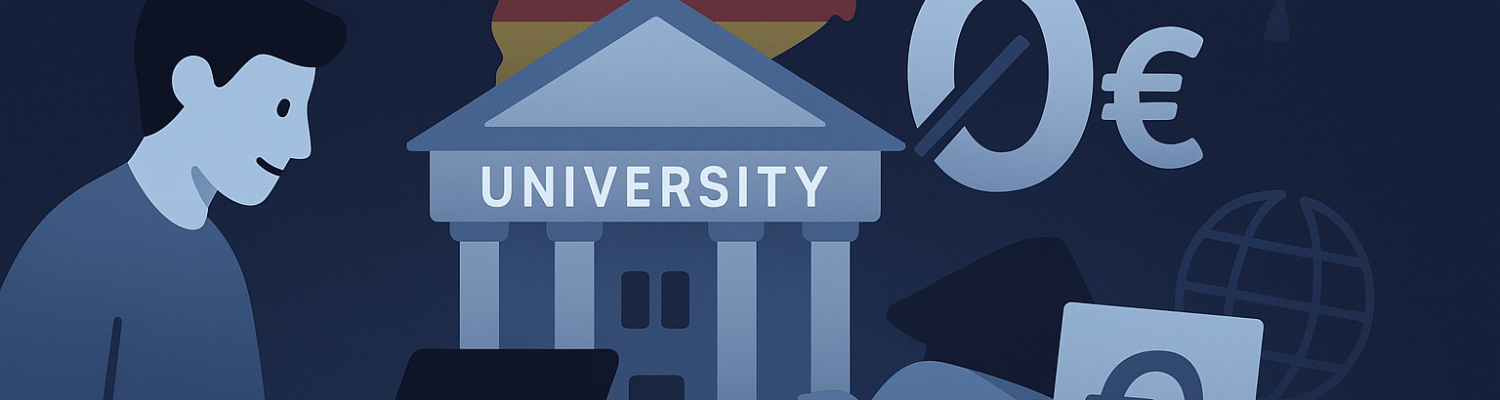
- Public universities dominate the German Higher Education System
- Check out our Video Course (64 min.)
- Browse the top public universities in Germany with our StudyFinder
- Why are all top-ranked universities in Germany public?
- Public universities in Germany are free for international students (with few exceptions)
- List of Public Universities in Germany
Video Course
Get Accepted into Your Dream German University — with the Perfect Letter of Motivation!



22 videos
 incl. Checklist + Template
Public universities dominate the German Higher Education System
Germany is famous for many things, from beer and pretzels, to old castles and palaces, to its car industry and efficient railway system. But don't overlook one of Germany's best qualities - its amazing higher education system! The German higher education system is made up of a combination of public and private universities, with the private ones usually offering a few specialised programmes and charging some tuition fees.
Although there is a wide range of private universities, the 240 or so public universities dominate the German higher education system.
Study programs offered
Enrollment of students
With such impressive figures, it’s clear that there’s a program for everyone at Germany’s public universities. It’s no surprise that so many students are enrolled, as studying at a public university in Germany comes with a major perk: it’s free. Yes, you read that correctly—FREE. At most public universities in Germany, there are no tuition fees. While some specialized programs may have exceptions, there’s no need to worry. In this guide, we’ll break down everything you need to know about studying at a public university in Germany, including the best tuition-free universities, top internationally ranked institutions, and the differences between tuition-free and tuition-based programs.
Check out our Video Course (64 min.) on "How to write a Letter of Motivation"

22 videos plus checklist and template
Go to the video courseBrowse the top public universities in Germany with our StudyFinder

Photo by Andrea Piacquadio from Pexels
Many students want to study abroad in Germany but aren’t familiar with the various universities, so to be on the safe side, they seek out the top-ranked institutions in Germany to apply to. To check out the internationally top-ranked German universities, let our StudyFinder serve as your guide. While we recommend for students to check their options and not just apply to a university because of ranking or name, we know that there are some great programs to choose from at these institutions! Approximately 40 universities are top-ranked internationally, but be sure not to underestimate those universities that do not make this international ranking list.
In Germany, there isn’t a significant difference between universities that are public or private or top-ranked than in other countries. There are also some programs which do not qualify in these international ranking systems because of a specialized focus they may have. For example, the Universities of Applied Science (UAS) programs are not ranked at an international level because of their focus on application and teaching over methodology and research. The international ranking system mainly takes research output into consideration, leaving many great programs at prestigious universities out of the rankings. In spite of this, many top-ranked German universities are also top-ranked internationally! Why is this? How can it be that these public institutions are putting the private universities to shame? It has to do with how Germans look at education, keep reading to find out more!


Why are all top-ranked universities in Germany public?
You may be asking yourself why all of the top universities in Germany are public. After all, the most well-known universities are usually private, aren’t they? Take for example the US, the prestigious ivy league circle with the top unis which charge infamous tuition fees for attendance. Well, you’re wrong. In Germany, the most well-known and top universities are public universities. What’s all that about?! As explained above, in Germany, there is not a great difference between private, public, or top-ranked universities. This is especially true for private and public institutions. Germany is home to some of the top-ranked universities worldwide and these universities are public and FREE. Take a look below:


* Except for Non-EU students (cf. “Special case: Baden-Württemberg”).
In Germany, education is thought to be and treated as a public good. Something that should be accessible to all citizens and inhabitants just as food is a public good. However, as private universities abroad became renowned worldwide (e.g. ivy league institutions of the US), private universities popped up in other countries too, including in Germany. Private universities have existed in Germany only since the 1980s!
They’re actually quite new and for this reason, Germany’s top-ranked universities are the older public universities which have a long standing reputation. This isn’t to say that there are not exceptional private universities in Germany, but rather, to reject the idea that a top-ranked university has to be private and expensive to be worthwhile. In Germany, public universities are tuition free and have the best programs available to anyone who wants to study them, even non-EU students!

Public universities in Germany are free for international students (with few exceptions)
While most public universities in Germany offer tuition-free education, there are a few exceptions worth noting. However, don’t let these exceptions discourage you from exploring the many great programs available! These cases are rare, and the majority of public university study programs are indeed tuition-free. Let’s break down these exceptions for you, so you can determine if any of these specialized programs might be the right fit for you.
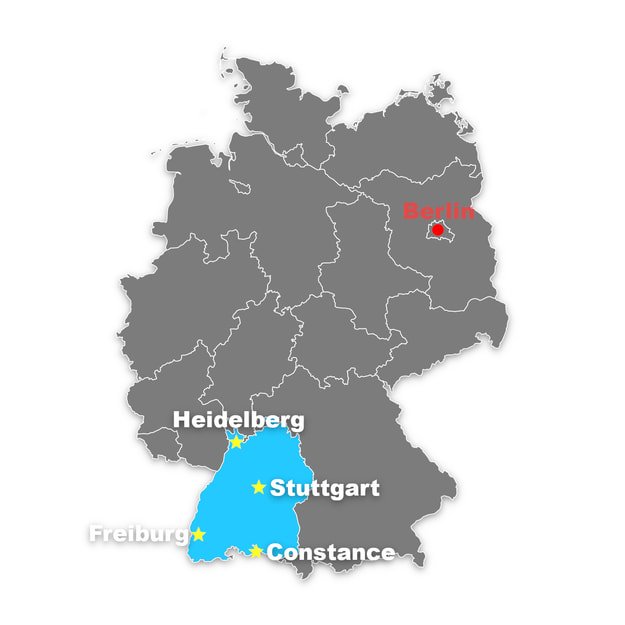
* Berlin is only indicated as a reference of its location in Germany.
- Baden-Württemberg: In the southwest of Germany bordering France and Switzerland, lies the state of Baden-Württemberg. Home to some of Germany’s most prestigious universities, it’s a great place to keep in mind when hunting for your dream study program. You should note, Baden-Württemberg has a mandatory tuition fee of 1,500 € per semester to all non-EU students. This means that some of the state’s more well known cities such as Heidelberg, Freiburg, Stuttgart, and Constance, will all charge this non-EU tuition fee at their universities. However, don’t be discouraged as there can often be waivers or reduced tuition fees for students with special circumstances.
- Professional Study Programs: In Germany, there are some professional or executive study programs which can charge a marginal tuition fee for attendance, even though they are offered by public universities e.g. L.LM (Master of Law), MBA (Master of Business Administration) or MPA (Master of Public Administration). However, these make up only about 15-20% of all study programs, so you can breathe easy. Click here to check out these professional programs with our StudyFinder tool!
- Specialized Programs: Specialized study programs are those that have very special components, partnerships, or joint programs that can sometimes charge a tuition fee. For example, many German universities partner with universities abroad, offering students the chance to study elsewhere for a semester or year during their degree programs. These specialized programs usually include a fee, so keep that in mind as you search.

Summary Box
Anyone can study in Germany for free with a great selection of study programs to choose from. Even the top-ranked universities in the country are public universities and are tuition free! Some points to keep in mind:
- Public universities dominate German higher education with more than 240 universities which make up about 90% of the university study programs in the country.
- Approximately 90% of students in Germany will attend a public university.
- Public universities in Germany are free, even for international students! There are some exceptions for specialized or professional degree programs and for the state of Baden-Württemberg which charges non-EU students a marginal tuition fee (1,500 € per semester).
- While private universities charge a tuition fee to their own discretion, the fees are still significantly lower (average of 5,000 € - 7,000 € per semester) than at private universities in other countries.
List of Public Universities in Germany offering Bachelors and Masters in English

Eberswalde University for Sustainable Development

Hochschule Merseburg

Freie Universität Berlin

Technische Hochschule Mittelhessen (THM)

University of Bayreuth

Saarland University

TU Darmstadt

FAU Erlangen-Nürnberg

Friedrich Schiller University Jena

TU Dortmund University
← Prev Page
1
2
3
...
33
Next Page →