
 Study programs
  Universities
  Intakes




Browse Study Programs
2 courses available
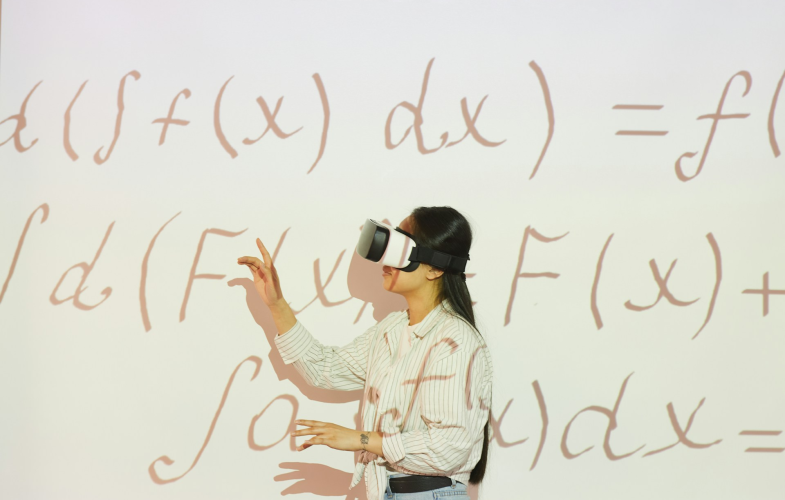

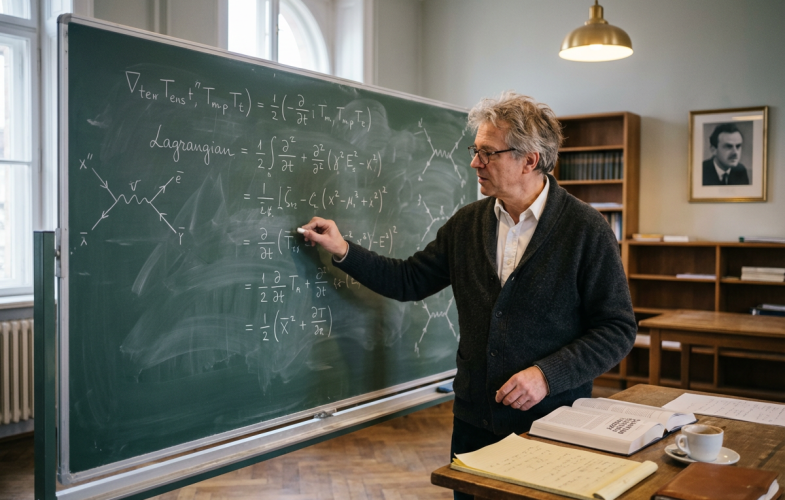
Mathematical Physics programs in Germany position international students at the sublime intersection where abstract mathematics reveals nature's deepest secrets, studying in the homeland of Heisenberg's uncertainty principle and Einstein's relativity—creating theoretical physicists who wield differential geometry to curve spacetime, use group theory to classify fundamental particles, and employ functional analysis to tame quantum infinities, all in pursuit of understanding reality's mathematical foundations. These intellectually demanding English-taught degrees require exceptional mathematical sophistication: students master quantum field theory's mathematical machinery predicting particle interactions to twelve decimal places, explore general relativity's tensor calculus describing black holes, investigate whether string theory's extra dimensions exist mathematically or physically, develop mathematical frameworks for quantum gravity, and understand why German mathematical physics emphasizes rigorous proofs over hand-waving arguments—discovering that nature's laws speak fluent mathematics. Germany's extraordinary theoretical physics tradition provides world-class research environments through prestigious institutes: Max Planck Institutes advancing fundamental theory, universities where Nobelists teach graduate courses, collaborative research centers tackling quantum many-body problems, connections to CERN and gravitational wave detectors, and seminars where mathematical beauty guides physical insight—experiencing how abstract mathematics illuminates concrete reality. The rigorous curriculum demands mastery of both disciplines: advanced mathematics from topology to representation theory, theoretical physics from statistical mechanics to gauge theories, computational methods simulating quantum systems, mathematical methods specific to physics problems, and philosophical foundations questioning mathematics' "unreasonable effectiveness." Mathematical physicists command €60,000+ starting salaries in specialized roles: postdoctoral positions at research institutes, quantum computing companies needing theoretical foundations, financial firms applying physics methods to markets, data science leveraging mathematical modeling skills, or academic careers advancing human understanding—all while Germany's unmatched theoretical physics heritage, nearly free education enabling years of deep study, generous research funding, and work permits create ideal conditions for international students pursuing nature's mathematical mysteries.
 Related subjects
 Mathematical Physics in Würzburg
Browse Study Programs
2 courses available
 Type in your Subject, e.g., Economics
  QS Ranking
 Which degree?
 Choose degree
 German Students
  Other EU Students
  Non-EU Students German Students German Students Other EU Students
  Non-EU Students Non-EU Students
| Admission-restricted courses | Admission-free courses | |
|---|---|---|
| Master | No courses | 15 July |
| Bachelor | No courses | 15 July |
 Specific courses may have different application deadlines. Please always double-check the information individually.

 StudyFinder
  UniFinder

 2 filter options selected
  Sort by: