


Finde deinen Studiengang
30 verfügbare Studiengänge
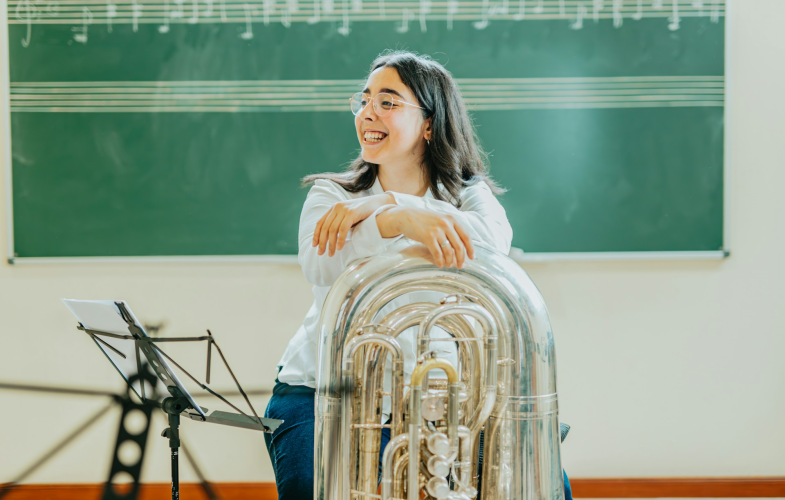
Musiktheorie: Top-Bachelorstudiengänge
Germany offers international students an unparalleled opportunity to study Music Theory in the birthplace of Western classical music tradition, where centuries of compositional excellence from Bach, Beethoven, and Brahms to contemporary theorists continues to shape global musical understanding. Pursuing Music Theory in Germany means accessing world-renowned programs at institutions like the Hochschule für Musik Hanns Eisler Berlin, University of Music and Performing Arts Munich, and the Leipzig Conservatory where Bach himself worked, learning from a nation whose systematic approach to music education and theoretical analysis sets international standards. German music universities deliver comprehensive Music Theory curricula that integrate historical analysis, contemporary compositional techniques, and Schenkerian analysis with practical applications in orchestration, counterpoint, and electroacoustic composition, utilizing extensive music libraries, original manuscripts, and state-of-the-art studios for computer-assisted composition and sound analysis.
Mehr anzeigen...Germany offers international students an unparalleled opportunity to study Music Theory in the birthplace of Western classical music tradition, where centuries of compositional excellence from Bach, Beethoven, and Brahms to contemporary theorists continues to shape global musical understanding. Pursuing Music Theory in Germany means accessing world-renowned programs at institutions like the Hochschule für Musik Hanns Eisler Berlin, University of Music and Performing Arts Munich, and the Leipzig Conservatory where Bach himself worked, learning from a nation whose systematic approach to music education and theoretical analysis sets international standards. German music universities deliver comprehensive Music Theory curricula that integrate historical analysis, contemporary compositional techniques, and Schenkerian analysis with practical applications in orchestration, counterpoint, and electroacoustic composition, utilizing extensive music libraries, original manuscripts, and state-of-the-art studios for computer-assisted composition and sound analysis. International students benefit from Germany's extraordinarily rich musical ecosystem with over 130 professional orchestras, 80 opera houses, and countless festivals, providing exceptional opportunities for practical application through analysis seminars with renowned performers, composition workshops, and collaborations with living composers exploring everything from spectral music to algorithmic composition. The programs emphasize both classical theoretical foundations and contemporary approaches including post-tonal theory, music cognition, and computational musicology, preparing theorists who can bridge historical understanding with modern analytical methods while contributing to scholarly discourse and practical music-making. With Germany's well-funded cultural sector valuing theoretical expertise, Music Theory graduates discover diverse career opportunities as university lecturers, music critics, dramaturgs at opera houses, editors at music publishers like Bärenreiter and Henle, and researchers at institutions preserving musical heritage, with competitive prospects in education and cultural institutions. The combination of affordable education, access to unmatched musical resources including original scores and historical instruments, exposure to living musical traditions from early music to contemporary avant-garde, and Germany's 18-month post-study work permit creates ideal pathways for establishing careers in musical scholarship. This powerful blend of historical depth, theoretical rigor, and practical musical culture makes Germany the optimal destination for ambitious students ready to advance musical understanding through scholarly excellence.
Weniger anzeigen
Finde deinen Studiengang
30 verfügbare Studiengänge
 Fachbereich eingeben, z.B. Wirtschaft
 QS Ranking
 StudyFinder
 UniFinder
 Zurück nach oben

 Sortierung: Mehr entdecken