



Kostenloses Webinar
Study Geoinformatics/Geoscience in Germany
Get an overview of how Geoinformatics/Geoscience degree programs in Germany work. Take the chance to speak directly with representatives from the universities.

4. März 2027, 16:00 (Europe/Berlin Time)

75 Minuten

live über Zoom


Sicher dir deinen Platz - und erhalte (kostenlos) vollen Zugriff auf MyGermanUniversity!
Webinar-Agenda
Begrüßung & Themaübersicht
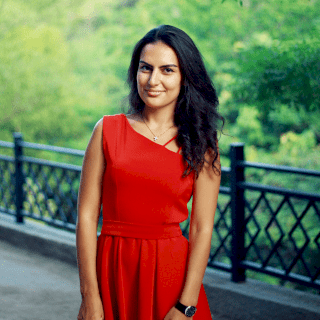
Präsentiert von: Nino, MyGermanUniversity
Eberhard Karls Universität Tübingen: M.Sc. Applied Environmental Geoscienсе
Universität Jena: M.Sc. Biogeoscience of the Anthropocеnе
Live-F&A mit Gästen
Voraussichtliches Ende des Webinars
Über den Studiengang 1
Applied Environmental Geoscienсе

(Beginn: Wintersemester)
- Beginn
- Wintersemester
- Zulassungsverfahren:
- lokaler Numerus Clausus (NC)
- Studienmodus:
- Präsenzstudium
Über die Hochschule 1

Über den Studiengang 2
Biogeoscience of the Anthropocеnе
(Beginn: Wintersemester)
- Beginn
- Wintersemester
- Zulassungsverfahren:
- NC-frei
- Studienmodus:
- Teilzeit (optional) ・ Präsenzstudium
Über die Hochschule 2
 1558
 16.106
 15% 18
Mehr über dieses Webinar
Clean drinking water, healthy soils, a stable climate: all of them depend on what happens on and below the Earth’s surface. Geoscientists investigate these processes in the field, in the lab, and with data, and develop solutions when things go wrong. In a world where human activity is reshaping the planet, their work has never mattered more.
Pick your direction
- Water and groundwater — investigate pollution, protect drinking water, and model how water moves underground
- Environmental chemistry and microbiology — understand how pollutants behave and how nature can break them down
- Earth systems and human impact — explore how land use, urbanisation, and climate change affect soils, water, and ecosystems
- Data and modelling — use data science and models to understand and predict environmental change
Why Germany?
Germany is a hub for environmental and geoscience research, with institutes like the GFZ Helmholtz Centre for Geosciences and Max Planck and Leibniz Institutes working on how the Earth and its ecosystems function. Programs combine fieldwork at real research sites, lab work, and data analysis, so you learn by investigating actual environmental problems.
In the webinar, you’ll find out:
- What these programs cover and how they differ
- Which background you need, from geosciences and biology to chemistry, physics, or engineering
- How to apply and what to prepare
- Where graduates work, from environmental consultancies and agencies to NGOs, insurance companies, and research
Webinar-Agenda
Begrüßung & Themaübersicht
Präsentiert von: Nino, MyGermanUniversity
Eberhard Karls Universität Tübingen: M.Sc. Applied Environmental Geoscienсе
Universität Jena: M.Sc. Biogeoscience of the Anthropocеnе
Live-F&A mit Gästen
Voraussichtliches Ende des Webinars
Was du in diesem Webinar lernen wirst
Top-class education
No tuition fees
Study in English
Work opportunities
Find your study program
Academic requirements
Language requirements
Application process
Scholarships
Talk to universities
Geoinformatics
Geoscience
Deine Hosts
Host
Nino
Team MyGermanUniversity
Work experience:
German-Arab Chamber of Industry and Commerce,
Institute for Intercultural and International Studies - Universität Bremen
Degree:
M.A. International Relations: Social Theory and Global Governance (Universität Bremen);
B.A. in International Relations, Minor in Economics (International Black Sea University, Tbilisi/Georgia);

Und das Beste:
Während des Webinars kannst du alle deine Fragen im Chat stellen!