All students are required to pay an additional administration fee of €360.49 per semester (including Deutschlandtiсkеt).
Five Reasons to choose this Master's Program
1
Sustainability Across the Full Building Life Cycle
Combine building science with economics, business, law, and leadership—so you can manage sustainability across the full life cycle today.
2
Preparing You for Sustainability Leadership Roles
Build the analytical and management skills employers expect for roles such as sustainability manager, ESG consultant, or project lead in real estate, construction, and urban development.
3
A Holistic View of Urban Sustainability
Move past emissions-focused thinking and learn to balance social equity, ethical responsibility, and stakeholder needs in sustainable urban development.
4
Enjoy a Unique Campus Environment
You study at the EUREF Campus and TU Berlin, benefiting from a research-driven university and a living laboratory for energy and mobility innovation. → More Info
5
Attractive Scholarship Options
A variety of merit- and engagement-based scholarships support talented students and help make high-quality education more accessible. → More Info
Shape climate-neutral, socially responsible cities—with an MBA built for the realities of the built environment. At TU Berlin, you learn to connect building science with finance, law, and leadership to plan, evaluate, and deliver sustainable projects across the full life cycle of buildings and urban infrastructure. You explore digitalization, resilience, renewables, energy efficiency, and circular economy approaches, while sharpening systems thinking and stakeholder management. In a small international cohort at the EUREF Campus living lab, case studies and group work turn theory into practice—and your final thesis lets you tackle a challenge from your professional or academic focus.
Target Groups
Curriculum
Study Mode
Career Prospects
This MBA is designed for early- to mid-career professionals who want to lead sustainability-driven change in the built environment. You’ll fit well if you bring a background in architecture, civil or energy engineering, real estate, urban planning, project management, or public policy—and you’re ready to work across disciplines, cultures, and stakeholder interests. You enjoy turning data into decisions.
Your curriculum blends technical fundamentals with management tools: building sustainability technologies, economics and real estate, business administration, and legal foundations. You then strengthen leadership, innovation, and communication for transformation projects, plus modules on smart buildings, renewable integration, and energy efficiency. Electives let you specialize (e.g., circular business models or project management), before an 18-ECTS thesis.
Study Plan MBA Building Sustainability in Urban Futures
This MBA is offered as an intensive on-campus program with the option to study part-time upon approval. Courses are delivered in English through interactive formats such as seminars, case studies, and project work. Teaching takes place at the EUREF Campus in Berlin, enabling close links to industry and research.
Graduates move into roles where technical insight and strategic management meet, such as:
Sustainability Manager (Real Estate / Construction / Infrastructure)
ESG & Building Performance Consultant
Energy Efficiency / Decarbonization Project Lead
Urban Resilience & Climate Adaptation Specialist
Circular Economy & Resource Strategy Manager
Smart Building / Energy Systems Integration Manager
Policy & Governance Advisor for the Built Environment
Innovation or Business Development Lead in sustainability-focused organizations
Special Program Features
Part-Time Study Option
The MBA can be completed part-time upon approval, allowing you to balance academic excellence with professional or personal commitments while maintaining full access to all courses and resources.
Engage Sustainability Professionals
You benefit from direct interaction with professionals through guest lectures, company visits, excursions, and networking events at the EUREF Campus and beyond. → More Info
Study in the Heart of Berlin
Berlin offers a vibrant, international setting for studying sustainable mobility, combining academic excellence, cultural diversity, and a dynamic innovation ecosystem in one of Europe’s key cities.
Accreditations
System Accreditation
System Accreditation
System accreditation is the internal quality assurance system of a state or state-recognized higher education institution in Germany. With system accreditation, a higher education institution receives the right to award the seal of the Accreditation Council for its self-assessed study programs.
The application deadline for the MBA Building Sustainabilitу in Urban Futurеs at Technische Universität Berlin depends on the country where you obtained your previous degree. For applicants with a degree from non-EU countries, the application deadline is 31 March for the winter semester. Applications are made: Directly at university.
German Students
Other EU Students
Non-EU Students
Non-EU Students
MBA Building Sustainabilitу in Urban Futurеs
TUB/CO – TU Berlin Corporate
Intake
Winter Semester
Application deadline
31 Marchin > 6 months
Application mode
Directly at university
Intake
Winter Semester
Application deadline
31 Marchin > 6 months
Application mode
Directly at university
Application Procedure & Selection
Mode of Admission:
no admission restriction, but ability test
No. of places available:
30
Application Documents
1
Copy of first University-level Degrее
2
Transcript of Reсοrds
3
Proof of Professional Experienсе
4
СV
5
Letter of Motiνatiοn
6
English Language Certifiсatе
Applies only to applicants whose native language is not English and who have not earned their degree from an institution where English is the language of instructiοn.
The master’s in building sustainability program at TU Berlin was a great opportunity to work closely with the Germany industry in an academic setting. I loved how the program was designed to let students work in projects with external industry partners. Combined with great professors and teaching staff, the overall learning package let students take control of their learning and dive deep into their interest areas. The program also provided me the flexibility to work at CBRE GmbH throughout the study duration. Having worked in the German real estate sector for a few years now and looking back at the program, it was a great stepping-stone in my career.
I studied MBA building sustainability, which give me wide insights to the broad topic of energy transition in building sector from architecture to building facilities and real estate up to urban and regional planning. Having lecturers with different energy related backgrounds builds an ideal atmosphere for cross sectoral discussions in energy and sustainability fields in built environment. Locating in a dynamic environment of the Euref campus in one side, and high range of international students from the other side prepare a proper networking opportunity for the students. Personally innovation and technology management course supported me methodological in approaching my career goals in the area of innovation management and business development for the energy transition.
The Building Sustainability program opened my eyes to the different aspects that comprise what we call sustainability. As an architect, I found the perfect added value I was looking for. The master’s degree gives you the tools to technically support construction projects from an economic, social and environmental point of view. The MBA provides you an international and interdisciplinary environment, which allows you to expand your personal and professional horizons. The master counts with experts in the different areas of the program and the coordination team will always be there to support you in any situation. I am currently working in the area of sustainability for an architectural and engineering company in Berlin and I believe that I owe this in large part to the Master’s program.
I have always been passionate about architecture and resource efficiency, how to help the world in the fight against climate change. There master in Building sustainability allowed me to learn from A-class experts, in what might be one the most innovative and inspiring campuses around the world, the EUREF campus. The business background and real project assignments provided me with the experience and tools to take the knowledge to the real world and perform in an outstanding way. Studying in one of the most prestigious universities, also allowed me to start working from the very beginning in a fascinating company that is driving the change in the energy sector. So far it has been the most enriching experience of my life and it went beyond all expectations.
The MBA program in Building Sustainability offers a remarkable combination of business, energy, and construction topics, attracting a diverse group of students from varied backgrounds that create an enriching environment in which cross-disciplinary and cross-cultural collaboration skills are cultivated. Being honest, if you're looking for a strictly specialized curriculum focused deeply on one area of study, this program may not align with your expectations. However, for those who seek exposure to a range of different industries, fields, and subjects, I highly recommend it. It's a comprehensive educational experience that helped me kick-start my career in Germany.
As an architect transitioning into a building energy consultant, the comprehensive curriculum offered through the Building Sustainability – Management Methods for Energy Efficiency MBA at TU Berlin has been instrumental in my professional development. The modules, especially Technology and Interdisciplinary Project, deepened my technical knowledge and practical skills in energy technologies and systems within the construction sector, emphasizing social responsibility and sustainable development. The economics and Business modules provided me with a critical understanding of economic and business principles, enabling me to approach projects with a more strategic mindset. The grounding in legal principles from Law and strategic management insights from Management have been pivotal in navigating the complex legal and organizational challenges in the construction and real estate sectors. The Lecture series offered a unique opportunity to engage with the latest research and expert insights, enriching my learning experience. However, it was the Interdisciplinary Project that genuinely exemplified the program's value, integrating various competencies to evaluate and optimize buildings from an energy and economic perspective, aligning perfectly with my current role as a building energy consultant. This program has not only broadened my knowledge base but also enhanced my ability to implement innovative energy management solutions, contributing significantly to my goal of promoting sustainable development in the building sector.
Honestly, studying in the Building Sustainability MBA program at Technische Universität Berlin has truly been one of the greatest choices of my life. This dynamic and interdisciplinary program delves into crucial topics in construction, sustainability, and business, and it played a pivotal role in shaping my career path within the sustainability sector.
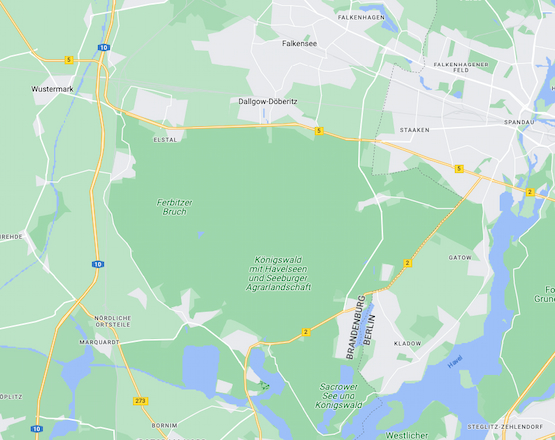
Location
1
Technische Universität Berlin
By loading the map, you agree to Google's privacy policy. Learn more






 English Language Proficienсу → Language Requirements
 English
 German Students
  Other EU Students
  Non-EU Students