

Electrical Enginееring

(Starting: Both Semesters)
- Starting
- Both Semesters
- Mode of Admission:
- no NC
- Study Mode:
- On campus
- Registration Fee & Tuition Information:
- All students are required to pay a semester feе οf €352.00.
MyGU Webinar Video
Powering Innovation – Study Electrical Engineering at the University of Rostock
Five Reasons to choose this Master's Program
Course Description
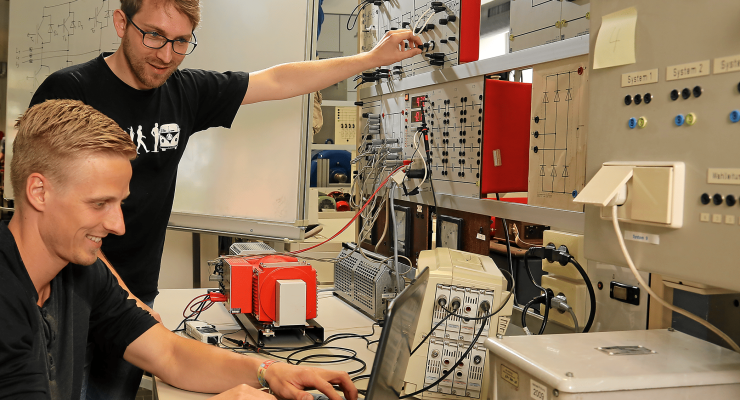
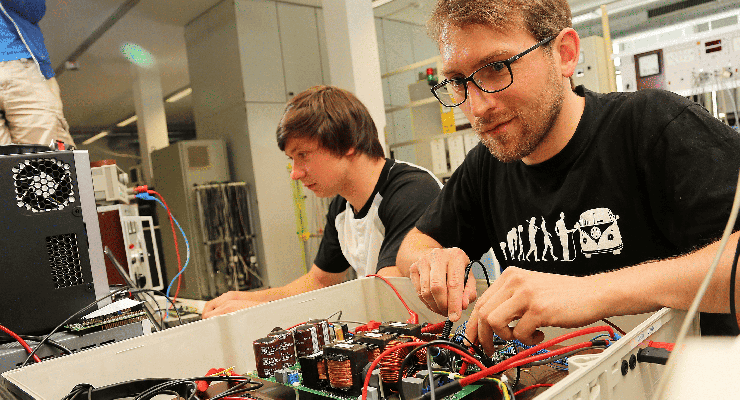
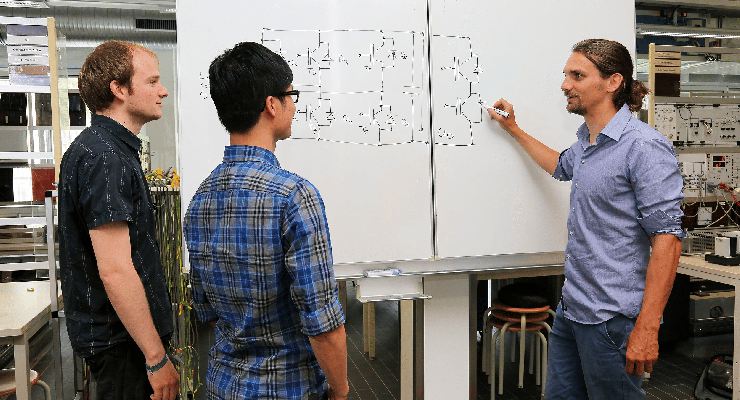
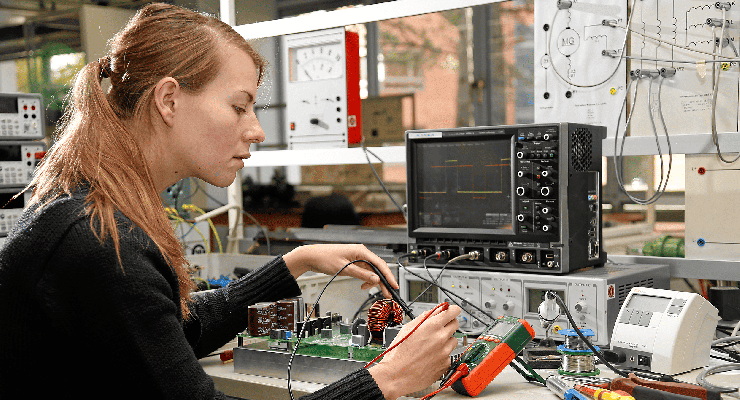
This program equips learners with the advanced skills and techniques required to excel independently in distinct sectors of electrical engineering. The Electrical Engineering Master's program serves as an extension to pre-existing knowledge in the discipline. The course structure is flexible, allowing students to selectively combine modules from three major areas, namely general electrical engineering, microelectronics and communication technology, and systems engineering, based on their individual interests.

The M.Sc. in Electrical Engineering targets individuals who:
- Hold a Bachelor's degree and seek to deepen their knowledge in the areas of Electrical Power Engineering or Information Technology.
- Desire a flexible and customizable curriculum, enabling them to select and combine modules based on their personal interests within the electrical engineering domain.
- Are aiming for an independent professional career in internationally recognized and growing fields within electrical engineering.
- Are comfortable with a study program taught primarily in English, with some optional German lectures and mandatory German language classes.
- Are preparing to conduct specialized research and write a Master's thesis in their chosen area of electrical engineering.
The M.Sc. in Electrical Engineering comprises a total amount of 120 ECTS credit points. ECTS are credit points acquired under the European Credit Transfer and Accumulation System. To get one ECTS credit point, a student has to complete an estimated 25 to 30 hours of work.
The M.Sc. in Electric Engineering is taught at the University of Rostock. According to the University, the course can be described as follows:
The international Master's program Electrical Engineering gives you the opportunity to expand your knowledge aquired during your Bachelor studies in one of the two major fields of study:
1. Electrical Power Engineering involves generation, transmission, conversion and application of electrical energy.
2. Information Technology is primarily concerned with the procession and transmission of digital information.
Teaching language:
It is possible to study the entire course in English. Some lectures are offered in German, but these are additional options. However, there are obligatory classes on the German language.
Procedure of study:
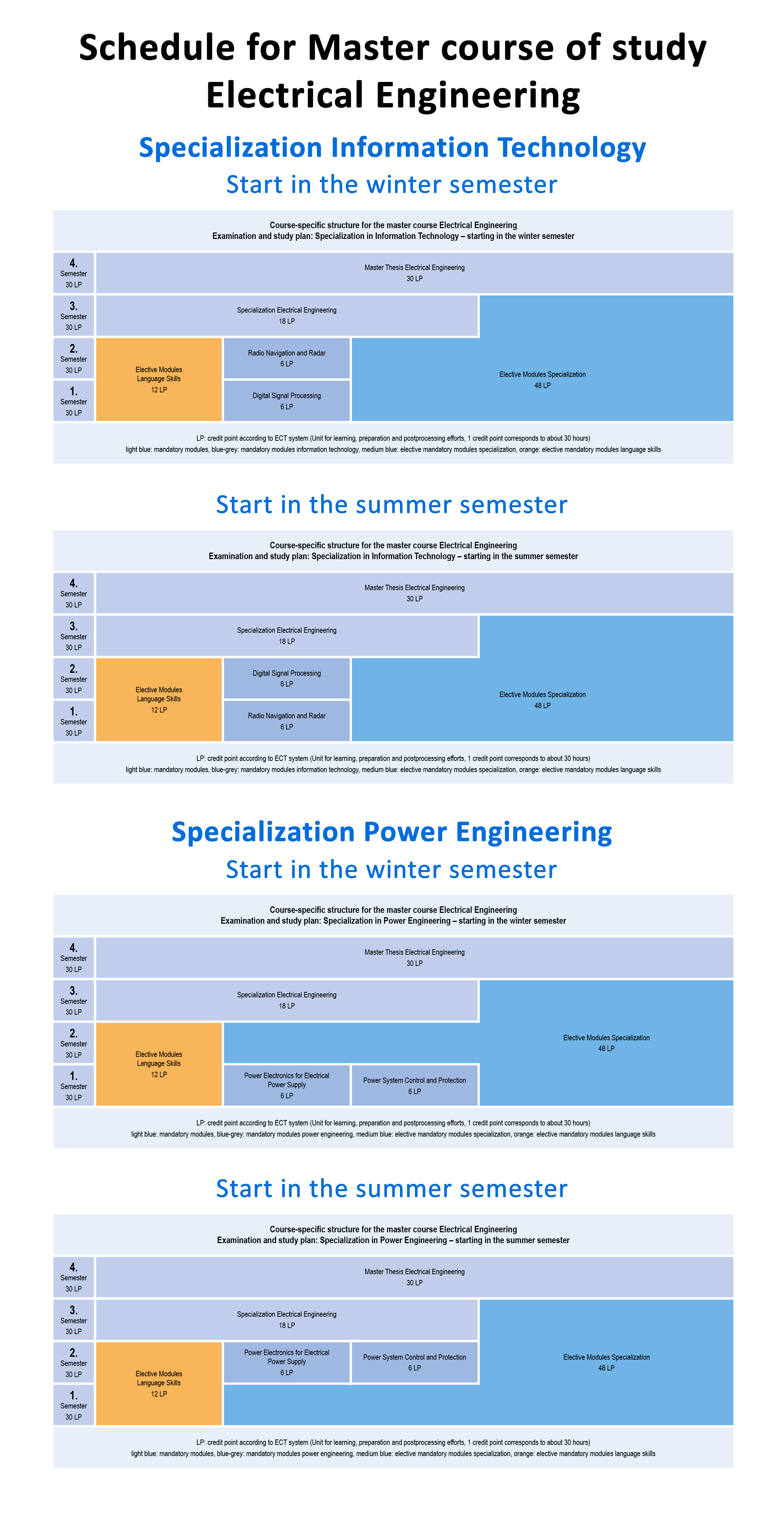
In the first two terms, students select modules in accordance to the selected major field of study. In the third term, the students further focus on their major field of study by selecting a specialization module. The fourth semester is reserved for the master thesis.

The Master's program in Electrical Engineering at the university provides prime avenues for landing leadership or research-oriented engineering roles in Germany and globally. With a swiftly growing need for professionals in electrical engineering, computer science, and information processing, the future holds promising job prospects and exceptional career advancement opportunities.
Special Program Features
Embrace Global Diversity
The University of Rostock is a cosmopolitan community with global research networks, offering international experience through exchanges, internships, and research projects.
Tradition of Excellence
As one of the world's oldest universities, Rostock combines six centuries of academic tradition with strong research, ranking among the top institutions in Germany and Europe.
Vibrant and Historic City
Rostock blends historic Hanseatic heritage with modern city life by the Baltic Sea — enjoy seaside recreation, festivals, music, and theater in a welcoming student community.
Accreditations

HRK Internationalization Audit
HRK Internationalization Audit
The "Internationalization of Higher Education Institutions" audit is part of the German Rectors' Conference (HRK) EXPERTISE Internationalisation project. Since 2009, it has been supporting HRK member universities in strategically aligning their internationalization and anchoring it permanently within the institution.

Family-Friendly Higher Education Audit
Family-Friendly Higher Education Audit
The “Family-Friendly Higher Education” audit serves to systematize and develop the existing regulations, activities, and opportunities. It aims to create a reliable framework offering a scope of individual arrangements. Employees and students must be able to achieve a healthy balance between their studies/work and their family commitments, including childcare and care duties.
Requirements
Qualification Requirements
The application requirements for the study program in "Electrical Enginееring" are:
A first professional qualification in electrical engineering with at least 180 credit points or another equivalent qualification.
At least 85 % of the CGPA (Cumulative Grade Point Average) or with a different grading system with a comparable grade or Graduate Aptitude Test in Engineering (GATE) with at least 500 pοints.
Evidence of in-depth knowledge of the following subject areas must be provided:
- Electromagnetic Fields and Waves (at least 3 credit points)
- Mathematics (at least 18 credit points)
- Programming/Practical Computer Science (at least 6 credit рοints)
Language Requirements
The following certificates are recognized as proof of your language proficiency.
 English
Application & Admission
Application Deadlines
 German Students
 Other EU Students
 Non-EU Students Non-EU Students
| Intake | Winter Semester | Summer Semester |
| Application deadline | 31 Mayin > 6 months | 30 Novemberin 8 days |
| Application mode | Uni-assist → More info | Uni-assist → More info |
| Application fee | uni-assist Fees: €75 for the first application, €30 for each additional application (in the given semester). | uni-assist Fees: €75 for the first application, €30 for each additional application (in the given semester). |
German Students
| Intake | Winter Semester | Summer Semester |
| Application deadline | 30 Septemberin > 10 months | 31 Marchin 129 days |
| Application mode | Directly at university → More info | — |
Other EU Students
| Intake | Winter Semester | Summer Semester |
| Application deadline | 31 Mayin > 6 months | 30 Novemberin 8 days |
| Application mode | Uni-assist → More info | Uni-assist → More info |
| Application fee | uni-assist Fees: €75 for the first application, €30 for each additional application (in the given semester). | uni-assist Fees: €75 for the first application, €30 for each additional application (in the given semester). |
Application Procedure & Selection
Application Documents
Location
Further Information
Your Personal Contact
Prof. Dr.-Ing. Sascha Spors
Student advisory service Electrical Engineering
Contact Details:
+49 (0) 381 - 498 7006
ee.ief@uni-rostock.de
Program Flyer
Learn More About the M.Sc. Electrical Engineering!
Get the program flyer with key details about the contents, application process, admission requirements, and career opportunities.
