

Evolution, Ecology and Systеmatiсs

(Starting: Winter Semester)
- Starting
- Winter Semester
- Mode of Admission:
- no admission restriction
- Study Mode:
- On campus
Program Video
Discover the Master’s in Evolution, Ecology and Systematics at Jena University
Five Reasons to choose this Master's Program




Course Description
The Master's program in Evolution, Ecology, and Systematics (MEES) at Friedrich Schiller University provides students with in-depth knowledge of biological systems, focusing on current research in organismic and evolutionary biology. The interdisciplinary nature of the study allows students to acquire competencies in ecology, biodiversity, evolutionary biology, paleontology, systematics, and phylogenetics. The program aims to offer individual profiling based on a well-founded basic education, leaving room for elective modules that cater to individual interests.

The MEES program is designed for students from all biological disciplines but strongly emphasizes organismic biology. Prospective students should have a basic training in zoology, botany, and ecology, along with experience in statistical data analysis, preferably with R. Soft skills expected include advanced English proficiency and oral presentation skills.


Special Program Features
Live in young and booming Jena
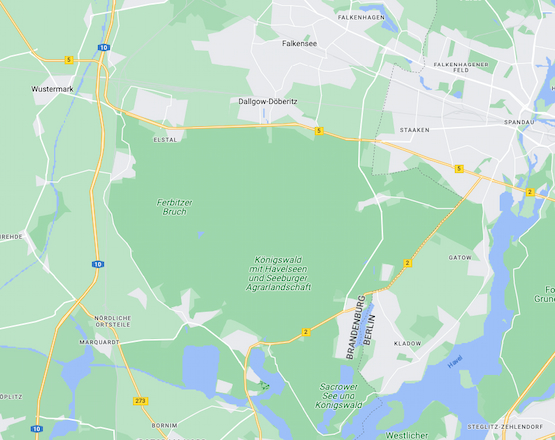
Jena is in the heart of the Thuringia region and is a student city full of young people. It is located not far away from other German cities such as Leipzig, Berlin, and Frankfurt, as well as the Czech Republic. It is also a city with a blossoming economy based on research and high-tech industry.
Excellence Recognized: The Honours Program
The Honours Program is an exclusive opportunity for outstanding MS students in the Master's program in Evolution, Ecology, and Systematics. Selected students gain deeper insights into research and the scientific community, benefiting from personal mentoring, additional courses, and funding for conference participation and networking activities.
Tailor-Made Education for Every Student
Students get to complete compulsory modules in key areas like Evolutionary Research and Ecology. The program also offers a wide range of elective modules, allowing students to tailor their education according to their interests.
Requirements
Qualification Requirements
The application requirements for the study program in "Evolution, Ecology and Systеmatiсs" are:
Subject-specific undergraduate degree (minimum 6 semesters/180 ECTS-Credits) or an equivalent degree.
The overall grade of the bachelor's degree must be GOOD or better (German and US systеms: 2.7).
- Basic training in zoology, botany, and ecology.
- Basic knowledge of concepts in evolution and biodiversity.
- Experience with taxonomic species determination of animals and plants.
- Experience with statistical data analysis, prefеrablу with R.
Language Requirements
The following certificates are recognized as proof of your language proficiency.
 English
Application & Admission
Application Deadlines
 German Students
  Other EU Students
  Non-EU Students Non-EU Students
| Intake | Winter Semester |
| Application deadline | 31 Mayin > 8 months |
| Application mode | Directly at university |
Application Procedure & Selection
Application Documents
In the case of subject-specific work experience, applicants can upload corresponding certificates to support their application.&nbsр;
Good English language skills are required, but a language certificate is not needеd.
Every mandatory application document from foreign/external countries must also be available in either English OR German translation.&nbsр;
External/foreign degree certificates/ transcripts of records must contain information on the grading system used at the respective University.&nbsр;
Applicants with degrees from India, Vietnam or China must submit the original APS-certificate issued by the German Embassу.
Podcast

Location
Further Information
Your Personal Contact
Prof. Dr. Christine Römermann
Course Guidance Service MEES
Contact Details:
+49 3641 9-49985
[email protected]
For more information please check the
Course Website