



Browse Study Programs
919 courses available
 Live Webinar "Study Digital Business Management [Webinar in German]""Study Business Administration" - Starts in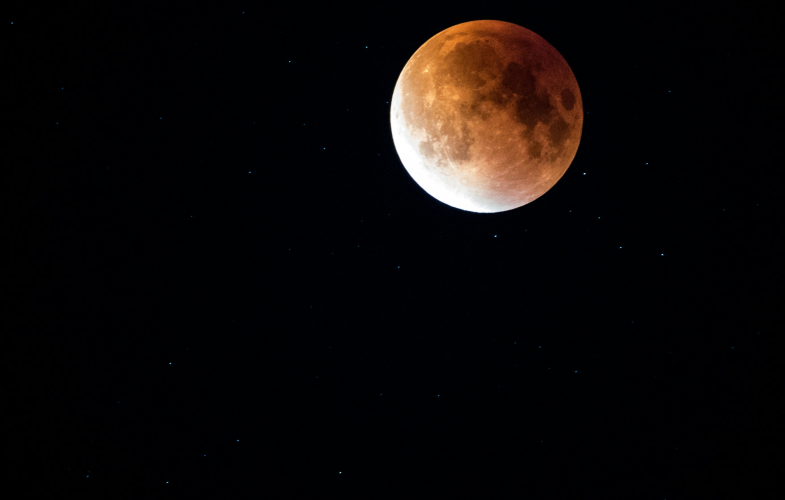

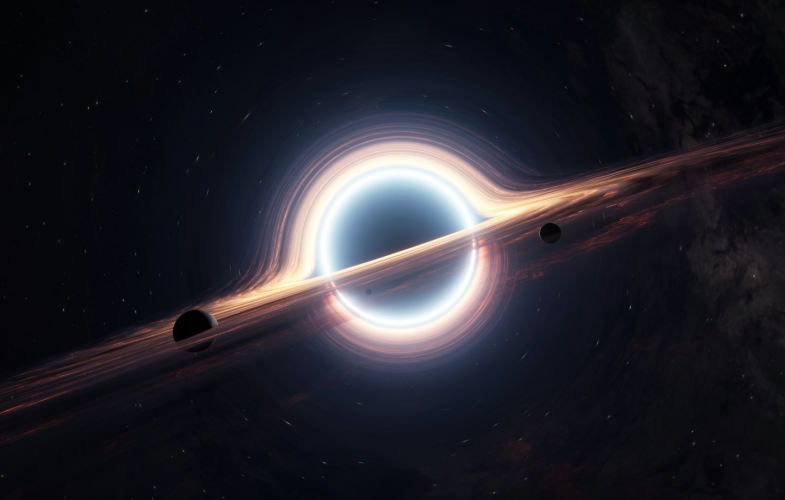
Germany stands as a premier destination for international students pursuing Space Science, offering exceptional access to Europe's space exploration ecosystem through the German Aerospace Center (DLR) with its 20 research facilities, the European Space Agency's (ESA) operations center in Darmstadt and astronaut training facility in Cologne, and world-renowned institutions like the Max Planck Institute for Astronomy and Max Planck Institute for Extraterrestrial Physics that are advancing our understanding of everything from exoplanets to black holes and gravitational waves. Through comprehensive programs that masterfully integrate astrophysics, planetary science, space engineering, and Earth observation with hands-on experience in mission design, satellite technology, and space instrumentation, students work with cutting-edge facilities including the SOFIA airborne observatory, access to ESO's telescopes in Chile, participation in missions like BepiColombo and JUICE, and collaborations with space industry leaders like Airbus Defence and Space, OHB System, and MT Aerospace who are building Europe's rockets, satellites, and interplanetary spacecraft. Germany's strategic position in international space missions, from the International Space Station to Mars exploration and the James Webb Space Telescope, combined with its thriving NewSpace sector featuring startups like Isar Aerospace and Morpheus Space revolutionizing small satellites and space propulsion, creates exceptional opportunities for research internships and career development in fields spanning astronomical instrumentation, satellite communications, Earth observation, space robotics, and astrobiology, with graduates commanding competitive starting salaries of €48,000-€58,000 as space systems engineers, mission analysts, remote sensing specialists, or research scientists. The powerful combination of affordable world-class education, participation in flagship European and international space missions, access to advanced ground stations and testing facilities, strong industry-academia partnerships through Germany's space clusters in Bremen, Munich, and Berlin, English-taught graduate programs, interdisciplinary approach linking space science with climate research and navigation technologies, and the generous 18-month post-study work permit establishes Germany as the ideal launchpad for ambitious scientists and engineers ready to explore the cosmos, develop next-generation space technologies, and contribute to humanity's quest to understand our place in the universe while addressing global challenges through space-based solutions.
 Study programs
  English-taught programs
  Universities
  Intakes
  Full Subject Profile
 Browse Study Programs
919 courses available
 Type in your Subject, e.g., Economics
  QS Ranking
 Which degree?
 Choose degree
 German Students
  Other EU Students
  Non-EU Students German Students German Students Other EU Students
  Non-EU Students Non-EU Students
| Admission-restricted courses | Admission-free courses | |
|---|---|---|
| Master | 15 July | No courses |
| Bachelor | 15 July | No information |
 Specific courses may have different application deadlines. Please always double-check the information individually. Which degree?Choose degree German Students Other EU Students Non-EU Students Non-EU Students

 StudyFinder
  UniFinder

 2 filter options selected
  Sort by: