Browse Study Programs
44 courses available
Geophysics Universities
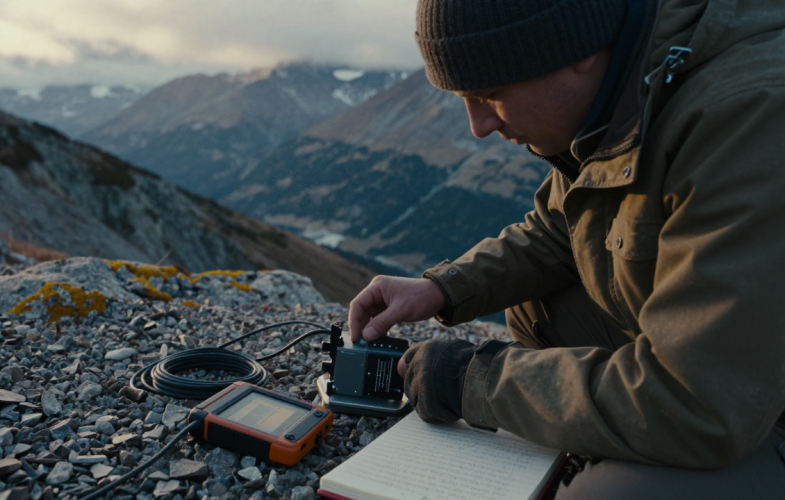
Geophysics programs in Germany offer international students the opportunity to explore the Earth’s physical processes in a country renowned for scientific rigor, cutting-edge research infrastructure, and strong links between academia and industry. Building on Germany’s legacy in seismic monitoring, mineral exploration, and environmental geoscience, these English-taught programs integrate core physics, mathematics, and geology with advanced methods such as seismic tomography, satellite geodesy, electromagnetic surveying, and geophysical data modeling. Students gain hands-on experience using state-of-the-art equipment—ground-penetrating radar, gravimeters, magnetometers—and access to research vessels for marine geophysics or field stations in the Alps and North Sea.
Geophysics programs in Germany offer international students the opportunity to explore the Earth’s physical processes in a country renowned for scientific rigor, cutting-edge research infrastructure, and strong links between academia and industry. Building on Germany’s legacy in seismic monitoring, mineral exploration, and environmental geoscience, these English-taught programs integrate core physics, mathematics, and geology with advanced methods such as seismic tomography, satellite geodesy, electromagnetic surveying, and geophysical data modeling. Students gain hands-on experience using state-of-the-art equipment—ground-penetrating radar, gravimeters, magnetometers—and access to research vessels for marine geophysics or field stations in the Alps and North Sea. Collaboration with leading institutions like GFZ German Research Centre for Geosciences, Helmholtz Centres, and universities such as LMU Munich and University of Kiel provides exposure to world-class research in natural hazard assessment, geothermal energy, subsurface resource mapping, and climate-related Earth system studies. Germany’s focus on renewable energy and sustainable resource management creates strong demand for geophysicists in sectors ranging from environmental consulting and energy exploration to infrastructure development and disaster risk reduction, with starting salaries typically between €48,000 and €55,000. With tuition fees often under €1,000 per year, generous DAAD scholarships, and an 18-month post-study work visa, graduates are well-positioned to build careers in academia, industry, or governmental agencies—applying geophysical expertise to solve pressing global challenges such as energy transition, water security, and climate resilience.
Browse Study Programs
44 courses available
 Type in your Subject, e.g., Economics
 QS Ranking

← Prev Page
1
2
Next Page →

 StudyFinder
 UniFinder
 back to top

 Sort by: