Browse Study Programs
10 courses available

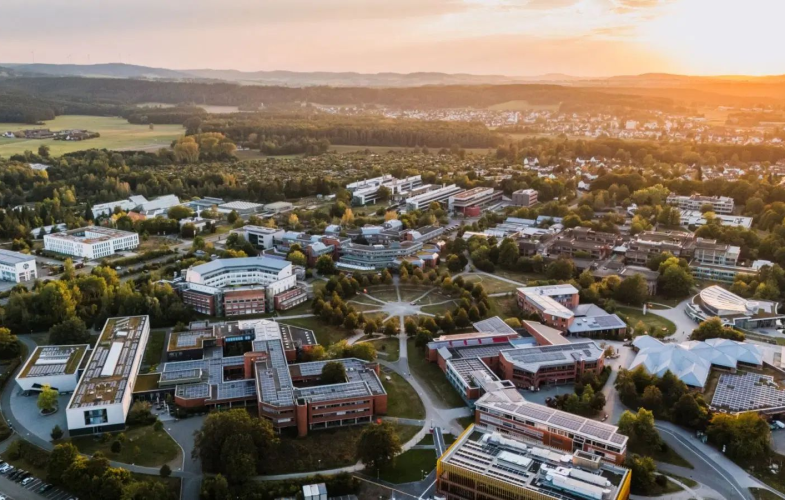
The Friedrich-Alexander-Universität Erlangen-Nürnberg (FAU), established in 1743, is Bavaria's second-largest university. It has 40,000 students, who are distributed between the Erlangen campus, which has 113,000 residents and houses the technical and medical faculties, and the Nuremberg campus, which has 520,000 residents and houses the faculties of economics, social sciences, and education. FAU is a public research university offering 260 degree programs across five faculties. The university has particular strengths in engineering, materials science, optical technologies, medical engineering, and energy technology.
Show more...The Friedrich-Alexander-Universität Erlangen-Nürnberg (FAU), established in 1743, is Bavaria's second-largest university. It has 40,000 students, who are distributed between the Erlangen campus, which has 113,000 residents and houses the technical and medical faculties, and the Nuremberg campus, which has 520,000 residents and houses the faculties of economics, social sciences, and education. FAU is a public research university offering 260 degree programs across five faculties. The university has particular strengths in engineering, materials science, optical technologies, medical engineering, and energy technology. FAU benefits from the region's concentration of the Siemens headquarters, Adidas, Puma, and numerous medical technology firms that provide internships and employment. FAU holds Excellence Initiative status for its Engineering of Advanced Materials cluster, placing it among Germany's elite research universities. FAU maintains standard public university admission requirements, and many programs have no NC restrictions except for medicine and psychology. Semester fees are around €150. The split-campus structure means different experiences. Erlangen offers a traditional university town atmosphere with concentrated student life, but rents are higher (€400–600 for shared housing). Nuremberg provides urban diversity and cultural amenities, but the campus is more dispersed, requiring commuting between locations. International programs include English-taught master's degrees in advanced materials, computational engineering, and international business studies. However, bachelor's programs typically require C1 German proficiency. The Erlangen-Nuremberg metropolitan region's economic strength in engineering, healthcare, and sporting goods creates strong employment prospects. The university's 265-year history provides extensive alumni networks. FAU is suitable for students seeking a comprehensive research university education with direct industry connections in southern Germany's prosperous economic environment. However, the split campus may complicate logistics for some programs.
Show less FAU: History-related subjects
 Type Study programs
 Term model
FAU: History
Browse Study Programs
10 courses available
 Type in your Subject, e.g., Economics

 Which degree?
 Choose degree
 All German Universities
 10 programs
 Universities in Bavaria 10 programs
 German Students
 Other EU Students
 Non-EU Students German Students German Students Other EU Students
 Non-EU Students Non-EU Students
| Admission-restricted courses | Admission-free courses | |
|---|---|---|
| Master | No courses | No information |
| Bachelor | No courses | 15 July |
| State Examination | No courses | 15 July |
 Specific courses may have different application deadlines. Please always double-check the information individually.
 back to top
 Sort by: