



 See them all



Browse Study Programs
4 courses available
 Live Webinar "Study Digital Business Management [Webinar in German]""Study Business Administration" - Starts in
Biophysics NC

 26 June 2026, 04:00 PM (Europe/Berlin)
With speakers from...

Johannes Gutenberg University Mainz

Biophysics NC
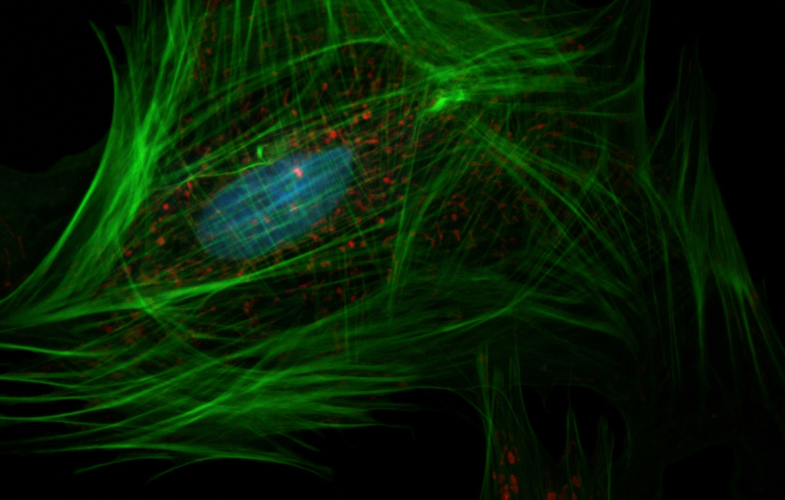
Germany's Biophysics programs place international students at the extraordinary convergence where quantum mechanics meets living matter, studying in the nation that pioneered biophysical breakthroughs from Max Delbrück's phage genetics to recent Nobel-winning developments in super-resolution microscopy and cryo-electron microscopy—training scientists who decode life's physical principles from how proteins fold in nanoseconds to how neurons compute information through electrical signals. These interdisciplinary English-taught degrees reveal the hidden physics of life through cutting-edge research: tracking single molecules walking along DNA using optical tweezers that measure piconewton forces, imaging living cells at nanometer resolution using STED microscopy developed at Germany's Max Planck Institutes, modeling how ion channels generate the electrical storms of human thought, calculating the thermodynamics of ATP synthesis that powers every living cell, and discovering how quantum coherence enables near-perfect energy transfer in photosynthesis—proving that life operates at the very edge of physical possibility. You'll master nature's physics through comprehensive training spanning single-molecule biophysics using fluorescence resonance energy transfer to measure protein conformational changes, computational modeling simulating million-atom molecular dynamics of virus capsids, membrane biophysics understanding how cells maintain electrical potentials of 100,000 volts per centimeter, structural biology determining atomic-resolution structures using Germany's PETRA III synchrotron and European XFEL, and theoretical biophysics deriving equations that predict biological behavior from first principles—all while working in laboratories equipped with atomic force microscopes feeling individual hydrogen bonds, patch-clamp setups recording currents from single ion channels, and ultrafast lasers capturing photosynthesis in femtosecond snapshots.
Show more... Most Selective Biophysics Programs
  Which degree?
 Choose degree
 German Students
  Other EU Students
  Non-EU Students Non-EU Students
Browse Study Programs
4 courses available
 Type in your Subject, e.g., Economics Most selective Biophysics universities StudyFinder
  UniFinder

 1 filer option selected
  Sort by:
Biophysics NC
26 June 2026, 04:00 PM (Europe/Berlin)
With speakers from...
Johannes Gutenberg University Mainz