Browse Study Programs
20 courses available
Polymer Sciences: Top Tuition-free Programs
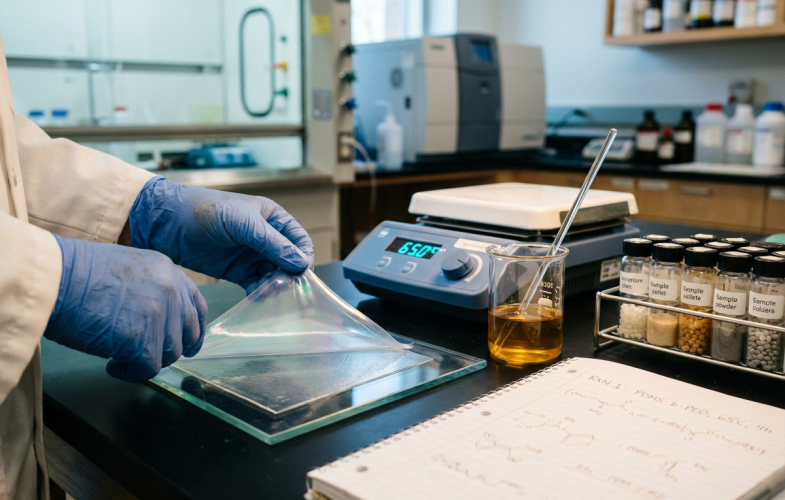
Polymer Sciences programs in Germany immerse international students in the molecular architecture of modern life, studying where macromolecules meet megaindustry—in a nation whose chemical giants like BASF and Covestro transform petroleum into everything from biodegradable plastics to artificial hearts, creating scientists who design materials atom by atom for properties impossible in nature, from self-healing coatings to shape-memory polymers that remember their original form. These interdisciplinary English-taught degrees explore the infinite possibilities of chain molecules: students synthesize polymers with precisely controlled architectures, characterize materials using techniques from rheology to electron microscopy, develop sustainable alternatives to petroleum-based plastics, engineer biomaterials compatible with human tissue, and understand why German polymer science's systematic approach yields materials performing reliably for decades—discovering that polymer science means programming matter's properties through molecular design. Germany's polymer industry leadership provides unmatched research opportunities through the entire value chain: chemical companies developing next-generation materials, automotive firms demanding lightweight high-performance plastics, medical device manufacturers requiring biocompatible polymers, recycling facilities pioneering chemical decomposition, and research institutes pushing theoretical understanding—experiencing how fundamental science transforms into products touching every aspect of modern life.
Show more...Polymer Sciences programs in Germany immerse international students in the molecular architecture of modern life, studying where macromolecules meet megaindustry—in a nation whose chemical giants like BASF and Covestro transform petroleum into everything from biodegradable plastics to artificial hearts, creating scientists who design materials atom by atom for properties impossible in nature, from self-healing coatings to shape-memory polymers that remember their original form. These interdisciplinary English-taught degrees explore the infinite possibilities of chain molecules: students synthesize polymers with precisely controlled architectures, characterize materials using techniques from rheology to electron microscopy, develop sustainable alternatives to petroleum-based plastics, engineer biomaterials compatible with human tissue, and understand why German polymer science's systematic approach yields materials performing reliably for decades—discovering that polymer science means programming matter's properties through molecular design. Germany's polymer industry leadership provides unmatched research opportunities through the entire value chain: chemical companies developing next-generation materials, automotive firms demanding lightweight high-performance plastics, medical device manufacturers requiring biocompatible polymers, recycling facilities pioneering chemical decomposition, and research institutes pushing theoretical understanding—experiencing how fundamental science transforms into products touching every aspect of modern life. The comprehensive curriculum bridges chemistry, physics, and engineering: polymer synthesis from step-growth to living polymerization, structure-property relationships linking molecular architecture to macroscopic behavior, processing technologies from injection molding to 3D printing, characterization methods revealing molecular secrets, and sustainability addressing plastic pollution. Polymer scientists command €58,000+ starting salaries in essential industries: R&D positions at chemical companies developing innovative materials, quality control ensuring product consistency, technical service helping customers apply polymers, sustainability roles designing circular economy solutions, or startups commercializing bio-based plastics—all while Germany's chemical industry dominance, nearly free education despite expensive research facilities, strong industry-academia collaboration, and work permits create ideal conditions for international students mastering the materials that define modern civilization.
Show less

 German Students
 Other EU Students
 Non-EU Students German Students
 Which degree?
 Choose degree
Browse Study Programs
20 courses available
 Type in your Subject, e.g., Economics German Students Other EU Students Non-EU Students German Students

 1 tuition-free program
 1 tuition-free program
 1 tuition-free program

 2 tuition-free programs German Students Other EU Students Non-EU Students German Students
 QS Ranking StudyFinder
 UniFinder
 back to top

 Sort by:

 Master of Science
 People Also Search
 You May Also Like Discover More German Students Other EU Students Non-EU Students German Students German Students Other EU Students Non-EU Students German Students
Disclaimer: You should use this text as a general guide, but it cannot serve as a guarantee. Keep in mind that there is no universal tuition fee & semester contribution that applies to all study programs and all student groups. Hence, we urge you to always individually double-check the specific fees of the specific study programs on their official websites.