Browse Study Programs
4 courses available
Astrophysics NC-Free
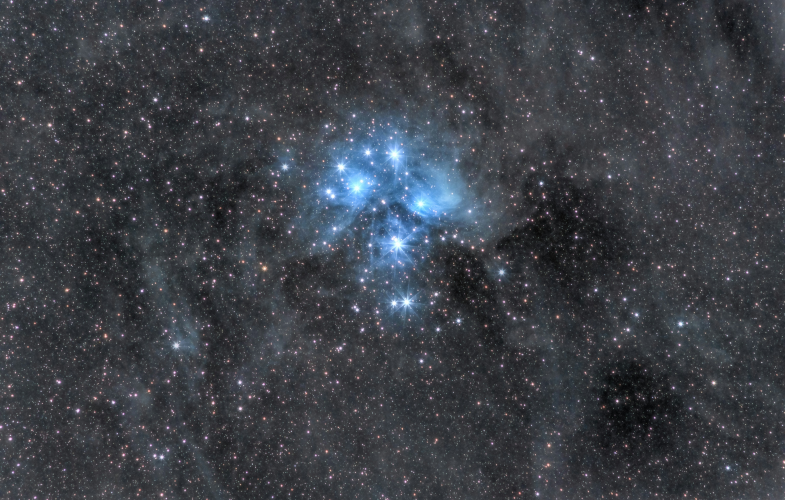
Germany offers international students an outstanding environment to study Astrophysics, combining rigorous scientific training with access to world-class research facilities in a country that plays a central role in European space science. Programs at leading universities and research centers—often connected to institutions like the Max Planck Institute for Astrophysics in Garching, the European Southern Observatory, and the German Aerospace Center (DLR)—equip students with deep knowledge of classical and quantum mechanics, electromagnetism, thermodynamics, statistical physics, and advanced mathematics, applying these principles to the study of stars, planets, galaxies, black holes, and the evolution of the universe. Courses integrate theoretical modeling, computational simulations, and observational methods, giving students hands-on experience with telescope data, spectroscopic analysis, and high-performance computing for large-scale astrophysical datasets.
Show more...Germany offers international students an outstanding environment to study Astrophysics, combining rigorous scientific training with access to world-class research facilities in a country that plays a central role in European space science. Programs at leading universities and research centers—often connected to institutions like the Max Planck Institute for Astrophysics in Garching, the European Southern Observatory, and the German Aerospace Center (DLR)—equip students with deep knowledge of classical and quantum mechanics, electromagnetism, thermodynamics, statistical physics, and advanced mathematics, applying these principles to the study of stars, planets, galaxies, black holes, and the evolution of the universe. Courses integrate theoretical modeling, computational simulations, and observational methods, giving students hands-on experience with telescope data, spectroscopic analysis, and high-performance computing for large-scale astrophysical datasets. Germany’s participation in major international projects such as the James Webb Space Telescope, the Atacama Large Millimeter Array (ALMA), and the upcoming Extremely Large Telescope (ELT) creates unique opportunities for student involvement in cutting-edge research. Many programs are taught in English and encourage interdisciplinary collaboration with particle physics, planetary science, and data science, while emerging topics like gravitational wave astronomy, dark matter research, and exoplanet atmospheres offer exciting specialization paths. Graduates pursue careers as research scientists, data analysts, aerospace engineers, and science communicators at universities, observatories, space agencies, and high-tech companies, with starting salaries around €45,000. Combined with Germany’s low or tuition-free education, robust research funding, and an 18-month post-study work visa, studying Astrophysics in Germany offers an ideal launchpad for those eager to unlock the secrets of the universe through scientific precision and discovery.
Show less Most Popular Admission-Free Astrophysics Programs

 See them all


 Which degree?
 Choose degree
Browse Study Programs
4 courses available
 Type in your Subject, e.g., Economics Universities with the most admission-free Astrophysics programs See them all StudyFinder
 UniFinder
 back to top

 Sort by:
 People Also Search
 You May Also Like


 Master of Engineering


 Discover More