

Filter all programs for your Language Certificate

Astronomy: English Programs
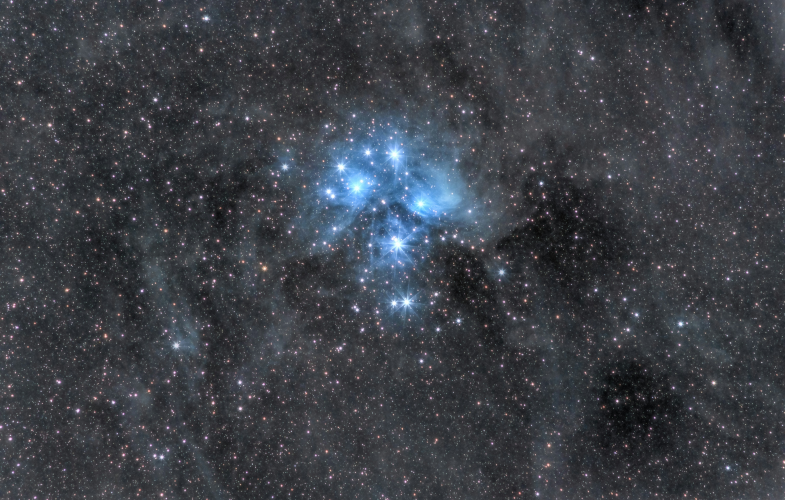
Germany is a leading destination for international students in Astronomy, offering world-class education and access to some of the most advanced research facilities in Europe. Programs are closely connected to renowned institutions such as the Max Planck Institute for Astronomy in Heidelberg, the European Southern Observatory in Garching, and universities equipped with cutting-edge observatories and high-performance computing systems for analyzing space- and ground-based data. Curricula combine theoretical astrophysics, observational methods, and computational modeling, covering areas like exoplanet detection, stellar evolution, cosmology, and gravitational wave research, while providing hands-on training with professional telescopes and advanced data analysis tools.
Show more...Germany is a leading destination for international students in Astronomy, offering world-class education and access to some of the most advanced research facilities in Europe. Programs are closely connected to renowned institutions such as the Max Planck Institute for Astronomy in Heidelberg, the European Southern Observatory in Garching, and universities equipped with cutting-edge observatories and high-performance computing systems for analyzing space- and ground-based data. Curricula combine theoretical astrophysics, observational methods, and computational modeling, covering areas like exoplanet detection, stellar evolution, cosmology, and gravitational wave research, while providing hands-on training with professional telescopes and advanced data analysis tools. Germany’s central role in the European Space Agency (ESA) and participation in major international projects such as ALMA and the upcoming Extremely Large Telescope (ELT) give students unique opportunities to contribute to groundbreaking discoveries. Many English-taught programs also address emerging fields like astrobiology, multi-messenger astronomy, and machine learning for big data analysis. With strong national investment in space science and technology, graduates are well-prepared for careers as research scientists, data analysts, aerospace engineers, and planetarium directors at institutions such as DLR, ESA, and leading satellite technology firms, typically starting with salaries around €45,000. Combined with tuition-free or low-cost education, access to global telescope networks, and an 18-month post-study work visa, Germany provides an outstanding platform for aspiring astronomers to explore the universe and push the boundaries of human knowledge.
Show less Intake
 Language of Instruction
 Numerus Clausus
 Tuition fees

 Germans & EU Students

 Non-EU Students


 Which degree?
 Choose degree
Filter all programs for your Language Certificate
Language Certificates  Your certificate level/score
Disclaimer: Each study program has its own specific language requirements. Hence, we strongly recommend checking each program individually for complete information about language requirements.
 QS Ranking StudyFinder
 UniFinder
 back to top


 Sort by:
 People Also Search
 You May Also Like

 Bachelor of Science


 Discover More