Browse Study Programs
7 courses available

Microbiology: Programs
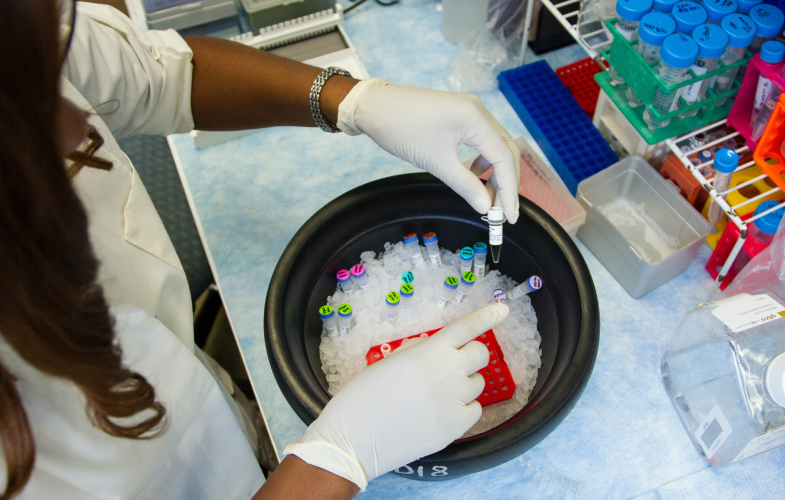
Microbiology programs in Germany place international students at the forefront of cellular and molecular research, offering world-class English-taught degrees at leading institutions such as the University of Tübingen, TU Munich, and the Max Planck Institute for Microbiology. Building on Germany’s pioneering legacy in bacteriology—the birthplace of Robert Koch—these programs combine cutting-edge research in virology, immunology, and systems biology with direct access to Europe’s €35 billion biotechnology sector. Interdisciplinary curricula integrate molecular microbiology, bioinformatics, microbial genomics, and synthetic biology with extensive laboratory training at state-of-the-art facilities, alongside collaborations with pharmaceutical leaders like Bayer, BioNTech, CureVac, and BASF’s biotech divisions developing next-generation antibiotics, probiotics, industrial enzymes, and microbial biofuels.
Show more...Microbiology programs in Germany place international students at the forefront of cellular and molecular research, offering world-class English-taught degrees at leading institutions such as the University of Tübingen, TU Munich, and the Max Planck Institute for Microbiology. Building on Germany’s pioneering legacy in bacteriology—the birthplace of Robert Koch—these programs combine cutting-edge research in virology, immunology, and systems biology with direct access to Europe’s €35 billion biotechnology sector. Interdisciplinary curricula integrate molecular microbiology, bioinformatics, microbial genomics, and synthetic biology with extensive laboratory training at state-of-the-art facilities, alongside collaborations with pharmaceutical leaders like Bayer, BioNTech, CureVac, and BASF’s biotech divisions developing next-generation antibiotics, probiotics, industrial enzymes, and microbial biofuels. Students benefit from Germany’s exceptional research infrastructure, including the DSMZ (German Collection of Microorganisms) and Helmholtz Centers for Infection Research, minimal tuition fees often under €1,000 per year, and prestigious DAAD or Max Planck fellowships worth €1,500–€2,000 per month. Training includes access to advanced technologies such as CRISPR genome editing and single-cell sequencing, while the 18-month post-study work visa opens doors to high-demand careers in pharmaceutical microbiology, clinical diagnostics, biotechnology R&D, and environmental microbiology. Graduates command competitive starting salaries of €50,000–€70,000 in Germany’s biotech hubs around Munich, Heidelberg, and Berlin, where microbiologists are driving breakthroughs in personalized medicine, sustainable bioprocessing, and the global fight against antimicrobial resistance from Europe’s life science powerhouse.
Show less Intake
 Language of Instruction
 Numerus Clausus
 Tuition fees

 Germans & EU Students

 Non-EU Students

Browse Study Programs
7 courses available
 Type in your Subject, e.g., Economics

 Which degree?
 Choose degree
 QS Ranking StudyFinder
 UniFinder
 back to top

 Sort by:
 People Also Search
 You May Also Like

 Master of Engineering


 Discover More